
































4th Inturotel conference on mediterranean archaeology
Chronicles of a liquid continent
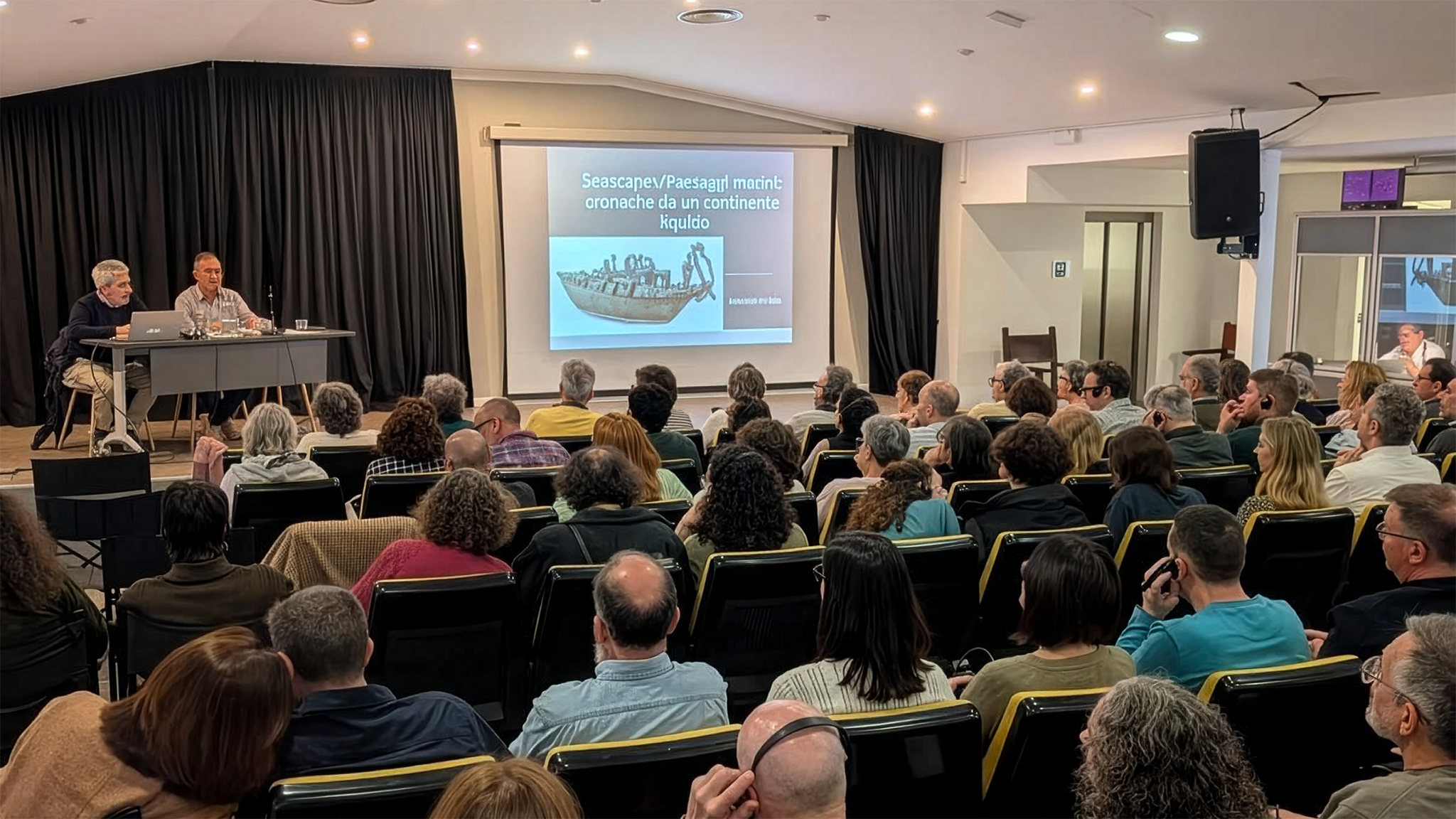
This year, in 2026, the Amics dels Closos association and the University of the Balearic Islands’ Closos research group invited Dr. Mauro Perra, the Sardinian historian, archaeologist and specialist in the Nuragic civilization, to take part in the 4th Conversations on Mediterranean Archaeology, sponsored by Inturotel. During his extensive career, Dr. Perra stands out as being the director of Vilanovaforru Archaeological Museum (Sardinia) and the joint director of excavations to the big Nurage Arrubiu (or red nuraghe) in Orrioli, together with Fulvia Lo-Schiavo. The conference was given in Italian with simultaneous interpretation between Italian and Catalan, which was a great success.
The Sardinians in the Nuragic era: Mediterranean explorers
The talk focused on the Nuragic civilization, starting with a general introduction after which Dr. Perra went on to outline the Mediterranean links that the inhabitants of Sardinia forged during the second millennium BC. Today (2026), research has progressed substantially, and a significant Nuragic presence in different central and eastern Mediterranean regions has been demonstrated. Specifically, Nuragic remains have been found in Sicily, Crete, Cyprus, Ugarit (on the coast of what is today Syria) and Corsica. The most fascinating archaeological insight to have been gained is not only the existence of contact with others in such far distant times, but also the intensity of these links. Indeed, Nuragic traders have been documented as living in Kommos (Crete), Cannatello (Sicily) and Pyla-Kokkinokremos and Hala Sultan Tekke (Cyprus). They almost certainly settled there and lived alongside the local population before going on to build fluid trading connections between Sardinia and the said places. Thanks to their command of different languages and their first-hand knowledge of the places where they lived, the Sardinians clearly acted as agents, forging permanent trading relations.
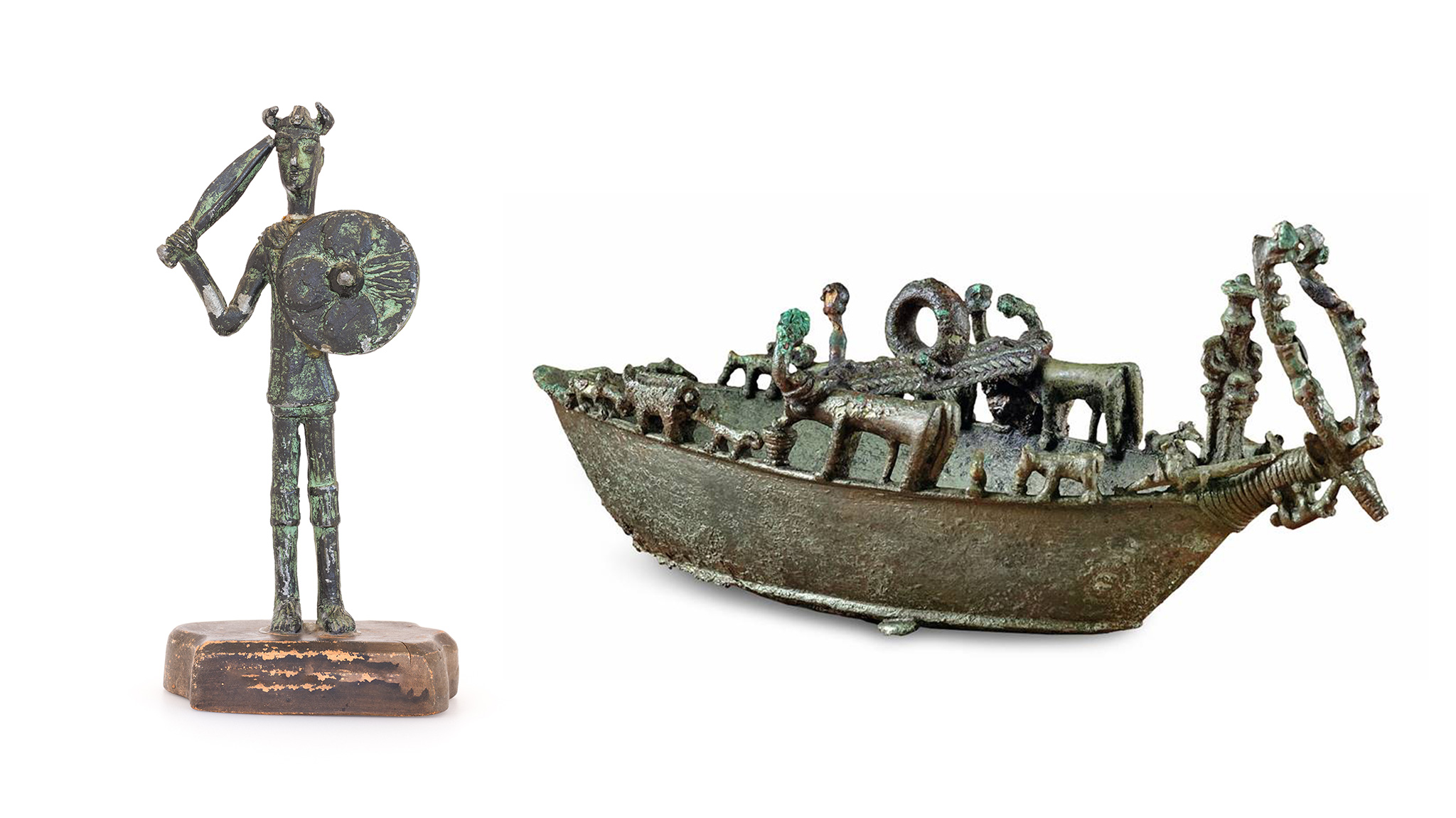
Lastly, Dr. Perra showed us some striking images of Sardinian archaeological remains from different Mediterranean sites, together with others of big Sardinian nuraghi, whose builders were the driving forces behind these maritime contacts in 1500 BC, a period that coincides with the highpoint of the Egyptian and Hittite empires.
The nuraghe: an ancient power symbol?
Nuraghi are big tower-shaped buildings dating back to around 1800 BC. Initially, there was no standard design to them. Although they were made with large stones, they had irregular, widely varying layouts. The oldest nuraghi are known as protonuraghi or corridor nuraghi and they stand out for their huge size. Found all over the island, they share certain similarities with the Corsican monuments known as “towers”. Later structures can also be found, known as tholos nuraghi, dating back to around 1500/1400 BC. These evolved versions of protonuraghi are relatively round-looking towers, occasionally standing up to three or four storeys high, with a height of up to 30 metres. Their most remarkable features–which they have conserved in many places–are their roofs, which form false domes. What is more, these towers are not always found on their own, since they can be integrated in architectural ensembles of up to five towers or more, linked by an inner defensive wall and surrounded by a second outer one with even more towers. Hence, they can be compared to medieval castles built some 3,000 years later.
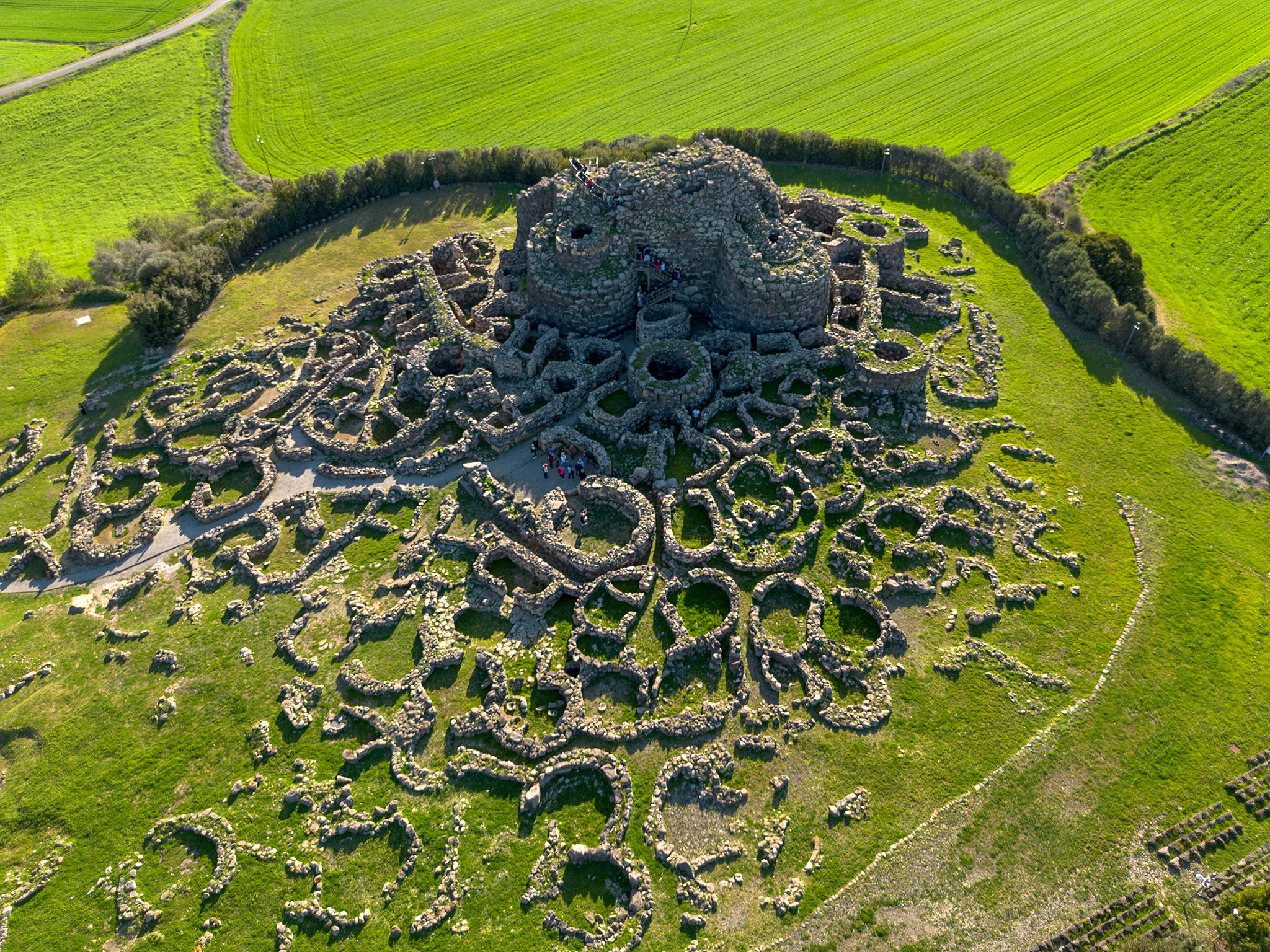
Their function continues to be a subject of debate among experts today, including Dr. Perra. It seems clear that they were not burial sites, homes or places of worship. So what were they for? The most widely accepted hypothesis is that they were big symbolic centres for the communities that built them. They were seats of power and the centre of communal life, not for a specific group of people but for the community as a whole. That is why there seems to have been competition among different communities, each trying to build bigger structures. In around 1200 BC, the system began to falter, and communities could no longer continue to build big Nuragic centres at such a frantic pace. In fact, some were left half finished. From then on, Nuragic communities changed the function of the nuraghi. No new ones were built, and they became a symbol of ancestral power for the community. They would continue to represent a collective identity, more through memories of the past than through new structures. As a result, during this period, many nuraghi became temples and the object of devotion. The creation of numerous bronze and stone statues that represent nuraghe can also be observed. These objects were placed either inside the rooms of buildings or in the centre of huts and worshipped.

Navetas & Nuraghi
During the said periods, a phenomenon with a very slight similarity can be observed in the Balearic Islands: the construction of navetas, the first big stone structures built with cyclopean masonry (large boulders). These homes are not tower shaped, but they can be tied in with the idea of a group identity, shared by the people who inhabited them. In the case of the Balearic Islands, the big difference is not just a formal one, since the navetas were family homes, while the nuraghi were community buildings for numerous families. For many years, attempts were made to identify a single civilization responsible for building the nuraghi in Sardinia, the towers in Corsica and the talaiots in the Balearic Islands. Today, highly reliable radiocarbon dating techniques have disproved this theory, since the first talaiots were built in 1200/1100 BC at the earliest, just as the nuraghi stopped being built. Thus there seems to have been no link between them at the time. This does not mean that there was no contact between the Balearic Islands and Sardinia. If Sardinians travelled to Cyprus or Crete, there was nothing to prevent them from going westwards. This is the path that current scientific research must take. And now that it is clear that the Talayotic and the Nuragic people are not one and the same, what is the connection between the nuraghi and the navetas? This is the big challenge that experts in prehistory like Dr. Mauro and the Closos team have posed, and it will no doubt mark the future of research and collaboration between Sardian and Balearic scholars.
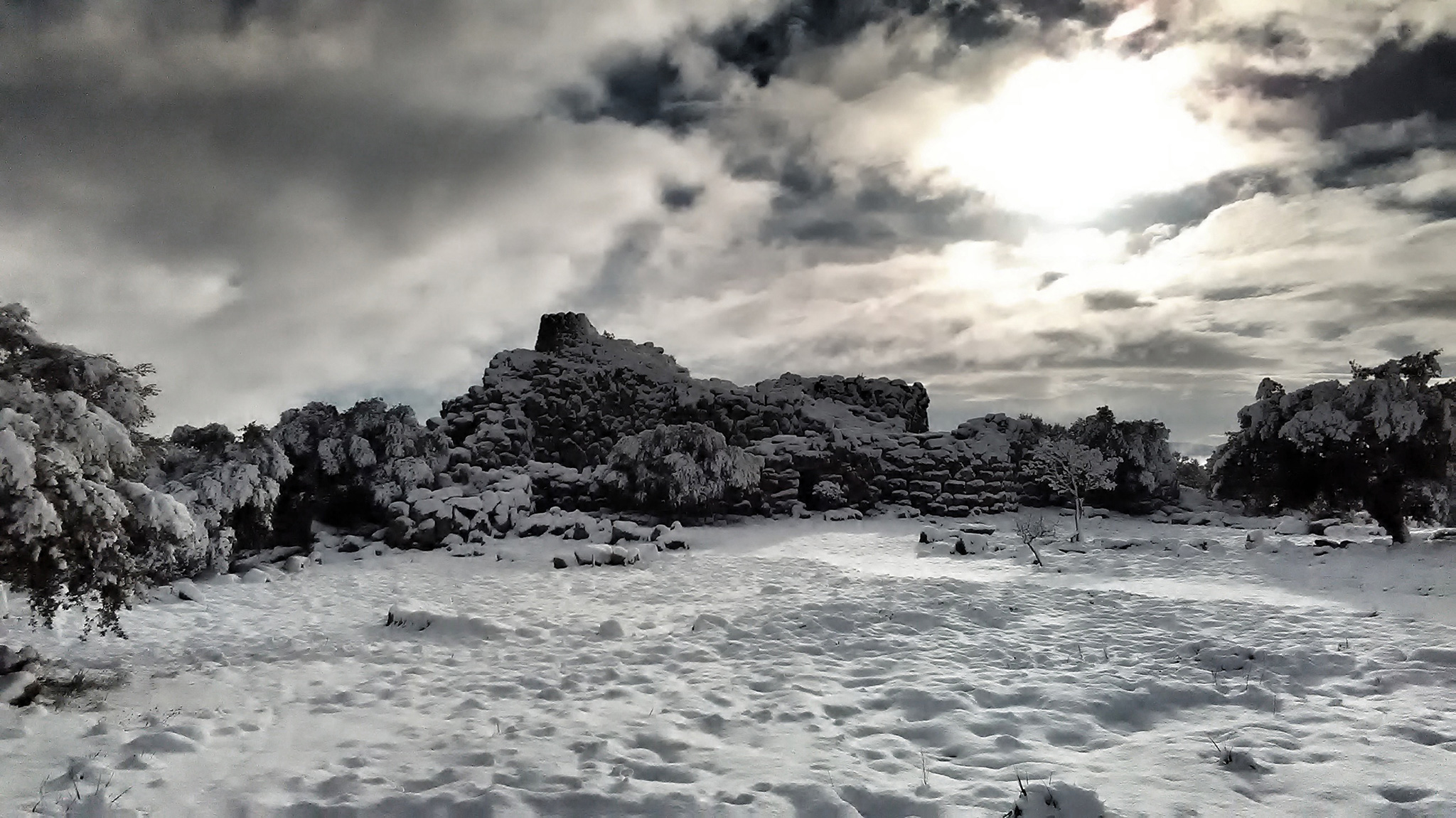
We urge you to get to know the prehistory of our island better by visiting the Closos navetas at Can Gaià, just a short distance from our hotels. You can even reach them by bike and enjoy the countryside that surrounds our towns and villages, taking an authentic trip back in time. Enjoy your visit!